| Axis | How it is defined |
|---|---|
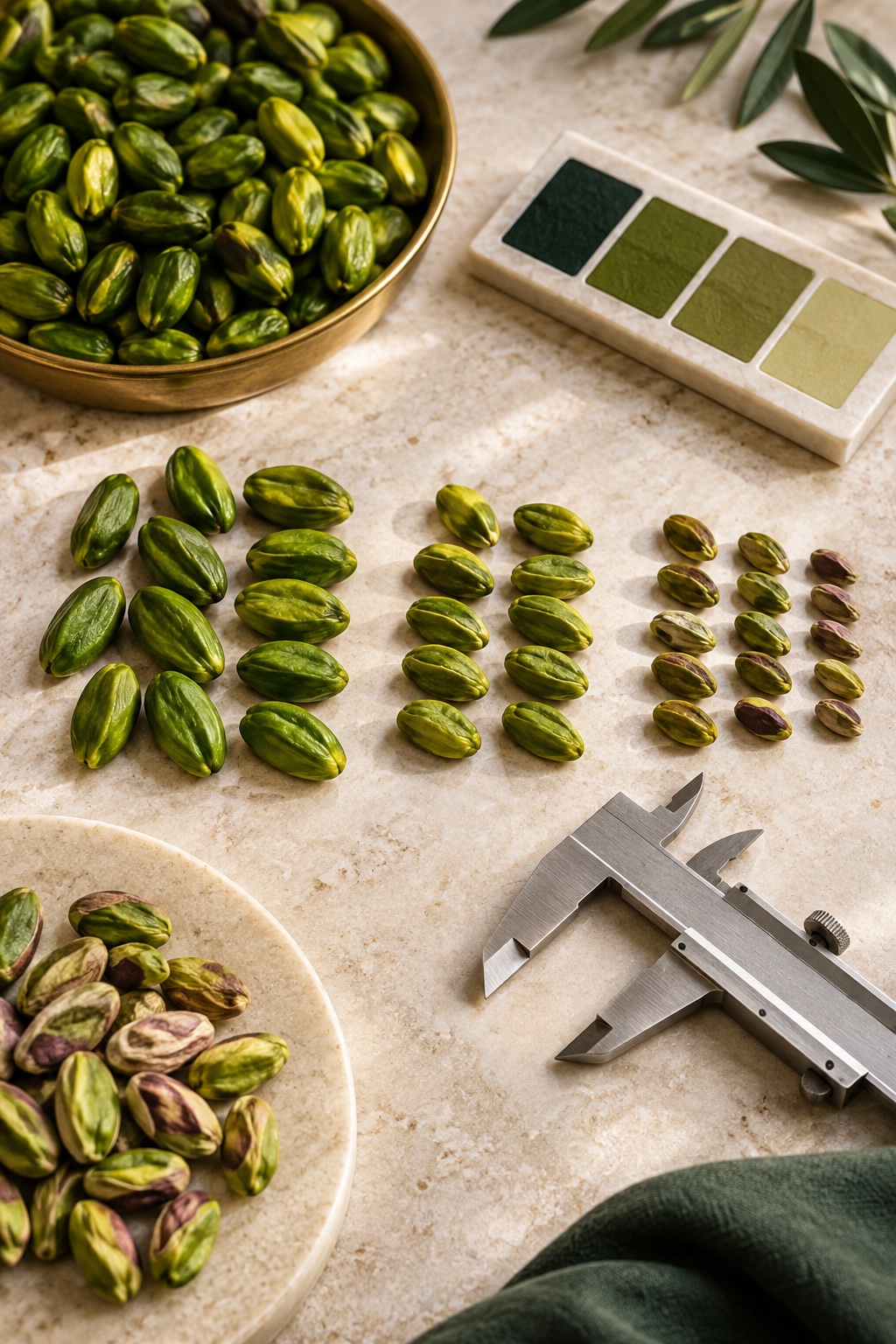
| Color | Approved reference and defined color range, including acceptable variation |
| Maturity | Very early, early, near-mature or mature source selection |
| Size | Kernel count per 100 g, average weight and optional dimensional range |
| Physical form | Whole, split or selected diced format where justified |
| Quality | Whole and broken percentages, defects, moisture and foreign material |
| Food safety | Aflatoxin profile, microbiology, residues and destination requirements |
| Packing | Food-grade inner pack, protection method, pack size and lot coding |
Specified, not described
It’s nut just green
Green gets attention. Specification earns the order. PEZTEH places customer-agreed measurable characteristics behind every commercial description.
Color · Uniformity · Size · Maturity · Integrity · Moisture · Defects · Microbiology · Aflatoxin
01
Specification axes
02
Why ripeness matters
Earlier harvesting generally supports stronger natural green color but can reduce kernel development and yield. As maturity advances, kernels become fuller while green intensity may move toward yellow-green. The optimum point depends on the buyer’s application and target economics.
03
Commercial specification card
Each approved commercial lot should connect its crop and source identity with measurable size, whole-kernel percentage, moisture, defects, laboratory results, packing and storage requirements.
Verification noteProprietary grade names and numerical limits will be published only after real reference samples and repeatable production tolerances have been validated.